Most birdwatchers in Delhi generally visit the Okhla Bird Sanctuary and the Sultanpur Bird Sanctuary for birding, and not many people have heard of the Garhi Mandu City Forest in north-east Delhi. This weekend I had the opportunity of joining forest officials and conservationists on an amazing trek through this forest, and the sighting of many unseen-before local and migratory birds. This was my first birding watching experience, and here is my review.
Bird Watching in Delhi
I started from home at about 7.15am and reached the Teesra Pushta red light at about 8.00am, to join the group of professional birders. While on the way, thick fog suddenly descended in the Delhi area, reducing the visibility to zero, and I became doubtful of sighting any birds. However, the team leader asked us to wait a bit for the fog to clear up, and treated us to tea and biscuits.
When the fog cleared up at about 8.45am, we went over to the pushta (mud bridge) and looked through our binoculars at the various birds in the water. We saw large comorants and little comorants perched on pillars sticking out of the water, as well as a variety of coloured ducks swimming in the water, and some smaller birds flitting about in the trash by the side of the bridge.
Trekking Through the Delhi Forest
We crossed the bridge and entered the Garhi Mendu City Forest through a gap in the fence. There was lush vegetation all around and puddles of water (as it had rained recently). We saw neelgai (blue bull – a kind of antelope) tracks in the wet mud, and vibrant butterflies flying over the wildflowers in the grass. The fresh morning air and slight cool breeze made for a heavenly walk through the forest.
Wish we had a botanist around to identify this plant.
The Garhi Mandu forest is divided into different habitats, each suitable for different types of birds. It has wetlands with ponds and shallow areas for aquatic birds like the comorants, storks and ducks. It has deciduous forests for arboreal birds like the owls, tree pies and parakeets. It has fields of long grass Savannah-like vegetation for terrestrial birds like the bulbul, as well as bushes for flycatchers and other small birds to live in.
The wooded area got thicker the deeper we went into the forest.
In total, we must have trekked about 5-6 kilometres, most of it through thick vegetation, marshy areas and pools of water. We saw about 50 species of birds, which included ducks like the pintail duck, northern shoveler, gallard and gadwal, as well as comorants, herons (white, grey and purple), egrets, kingfishers, yellow-bellied flycatchers, and various species of mynas and parakeets. The professional birders with us also kept a count of common birds like the crows, pigeons and kites, to check if their population has increased or decreased.
Reasons for Decline of Bird Numbers in Delhi
The birders and conservationists mentioned that the population of birds in such reserved wetland forests is much lower than before. I looked for reasons why this may be happening, and these are some of my thoughts on the issue:
Throwing of trash (mainly plastic bags) near the Yamuna area: There were some recycling sheds near the water’s edge, with stacks of trash piled outside them. While recycling may be cool, having the recycling units near the beautiful river bank certainly ain’t and spoiled the view.
Less water in the ponds: The water level in the ponds was said to be much lower than before, maybe because of dams and less water being sent out to the Yamuna River.
Fishing: The villagers of the area had given a contract to some fishermen to do fishing near the Yamuna, and they had spread out their nets. Fishermen not only disturb the birds with their boats and casting of nets, they also take away all the fish (which is the staple diet of many aquatic birds). We even noticed fishermen fishing in a pond located inside the city forest.
Children playing cricket and gilly-danda: Birds would surely be frightened away by the incessant chatter of the local childen and teenagers, as they laughed, yelled and played various games. We found kids in a flat grassy area in one section of the Garhi Mendu bird sanctuary. The forest officials told them to clear off but they kept arguing back.
Animals grazing on saplings: Animals like the neelgai, cows and buffaloes routinely roam about the forest to graze, and eat the saplings planted by the forest department before they can grow into big trees that the birds can nest in.
Villagers chopping up branches of trees for firewood: Well, it gets very cold in Delhi, and poor people have to find some way of staying warm. We noticed branches chopped off from trees, as well as river grass cut from the base up. This may have been used by the locals either as firewood or for building huts.
Other birds and animals: Many common birds of prey were sighted in the area: mainly kites and crows. While they may have be attracted to the forest because of the rubbish dumps and trash recycling centres outside, they also prey on small birds. In fact, we actually saw a kite swooping down on a barn swallow and taking it back to its nest. In addition to this, we also found the half-eaten remains of a kite that seemed to have been killed by a small animal (maybe a dog or a jungle cat).
Other noises: There was a busy road going past, with large trucks and buses rumbling down it. We also heard the drum beats of a nearby celebration.
I’m not sure how big a role air and water pollution play, but they are definitely reasons why birds may not be migrating and nesting in the Garhi Mendu Forest area, as much as they used to before. If a bird finds cleaner water and air about 20-30 kilometres further down the Yamuna in an area with less population density and industries, they would most certainly choose to live there.
After exiting the Garhi Mendu forest, we went into a special fenced trekking area set up by the government. This area was very fresh looking and there were a whole lot more birds here. There was also nobody fishing in the ponds. This area had a beaten track for walking and a generator that pumped water into the pond.
A multitude of birds in the Garhi Mendu bird sanctuary.
Well, all in all, it was a wonderful experience. We trekked a lot and were pretty tired by the time we left the forest at about 5.00pm. We saw many beautiful birds as well as animals like neelgai, wild boar, cows and buffaloes. The ponds were filled with fish, and we heard there were other animals like rabbits and wildcats in the area, as well as small reptiles like water monitors.
If you decide to visit the Garhi Mendu City Forest, remember to bring along your own snacks and lunch, as there is no restaurant or cafeteria inside. Also bring a plastic sheet for sitting on the wet grass. As there are no toilets, and you'll have to go behind the bushes and trees.
Have you been birding or bird watching in Delhi? Which is your favourite spot to sight birds and what has your experience been like?
I hadn’t gone on a vacation for a long time as I was busy with work and other issues. As my casual leaves for the year would lapse on 31st December, I thought I’d take a few days off and do something special – not too much, maybe a day trip to a nearby town. First we thought of going to nearby Agra or Jaipur, but eventually decided to go on a Sariska safari and do some tiger spotting. No one I know has ever really seen a tiger at the Sariska Tiger Reserve, and I didn’t really hope to sight one either – I just thought it would be wonderful to look at the deer and birds in their natural surroundings and get a feel of the outdoors. I could also wear the new ‘Outdoor Performance Gear’ jacket I had recently bought from Woodland, which was rather expensive.
Planning the Delhi-Alwar-Sariska-Delhi Trip
Before setting off, I did some research on the kinds of animals and birds that we would be able to see at the Sariska National Park, from their website www.rajasthanwildlife.in. We also booked online tickets for the safari jeep, which was Rs.105 per person. We were asked to enter identification details on the website (passport, voters ID card numbers on the site) and carry these identification documents with us. It was also mentioned to print individual indemnity forms (park will not be held responsible if tiger eats you etc.), and hand it to the guide when you enter the park. On arrival at the park, we would have to pay an additional Rs.350 per person for the gypsy and Rs.50 per person for the guide.
Well, we hired a Toyota Innova car (at the rate of Rs.11 per kilometer + toll charges + taxes etc.) and set off from Delhi to Sariska at 6.30 am. We had booked the afternoon safari, which was scheduled to begin at 1.30 pm, so there would be plenty of time to reach there. Please note, the timings of the Sariska safari (morning and evening) vary from month to month, as the daylight increases/decreases. As we started out from Delhi, it began to drizzle, and kept raining intermittently as we drove to Alwar and the Sariska Tiger Reserve. It also became freezing cold.
The Drive To Sariska for Tiger-Spotting
At about 9.30 am we stopped at a roadside dhaba called ‘Hotel Haveli Midway’ and had some hot aloo paranthas and tea. The place was clean and we were served well – the toilets were also clean and there was a bucket of hot water to wash hands - which was wonderful in this cold weather. The aloo parathas were really tasty, and we had a good laugh looking at the spellings on the menu. Here is a photo of it:
Check out the spelling of Rasgulla and Custard, not to mention gravy!
We then continued on to Sariska and Alwar. We were a bit early, and thought we’d check out some tourist places in Alwar – I heard there is a magnificent fort there. We checked our phones, ran a Google search and dug up information about what to see and do in Alwar – which was not much. We decided to go to the Alwar Fort – also known as Bala Fort. The scenery around Alwar city in Rajasthan was magnificent, with the towering Aravalli hills, the yellow mustard fields and trees. With the low lying clouds and slight drizzle, it seemed we were driving around a hill station rather than a supposed ‘desert’ area of India.
The Royal City of Alwar
We reached Alwar at about 10.30 am. It was a sleepy town. Not many shops were open and we could not buy the famous ‘milk cake’ sweet that Alwar is famous for. We asked around and drove to the Alwar Fort. The road from the Fort Gate to the actual Fort is about 13 kilometres, and goes in circles around a few Aravalli mountains. We had to be careful while driving, because the place was filled with peacocks, langurs and sambar deer, all jumping around. My sister had packed some pudina chutney sandwiches and we had a nice time feeding the sambar deer. They ate from my hand and were really cute.
Feeding a stag in Alwar - my Kirsten Stewart 'Snowhite' moment
The Fort was on top of one of the hills, from where you could see the whole town of Alwar below. It was not a very big fort, and had many cannons displayed inside.
Palace inside the Bala Fort in Alwar
People around town had told us that we required special police permission to go inside it, but when we reached there, we saw that the gate was open and no one was available so we just walked in. We also saw a nearby Hanuman temple and the ruins of another medieval monument.
The Sariska Tiger Reserve Safari
As soon as it turned 11.30 am, we ran back to the Toyota Innova and set off for Sariska. The scenery on the one-hour drive from Alwar to Sariska was even better than what we had seen before. We finally reached the Sariska Tiger Reserve at 12.30 pm, about one-hour before the evening safari was due to start.
We waited in line outside the ticket counter – it opened at about 1.00 pm. We had to pay an additional amount of Rs.150 (paid at the ticket counter) + 2,300 for hiring the jeep and guide, which we were supposed to give to the guide later. We were given a paper with a zone marked on it – which was zone 1.
We took our bag of snacks to the jeep (the guide allowed us) – and sat in it. Soon the driver and guide joined us. The driver had information that a tiger was lazing about in zone 3 (the smallest zone) and changed the zone. We then entered the Sariska Tiger Reserve – all set for a nice safari adventure. My brother was sure that we would spot a tiger, but I was not really bothered as I hadn’t heard of anyone spotting a tiger at Sariska before. I thought it would be good just to have a long ride in the wilderness in the jeep – in fact I was a bit nervous about actually sighting a tiger.
Tiger Sighting in Sariska
The driver and guide told us to keep our eyes peeled for the tiger, as we drove through the thick bushes and vegetation. They stopped outside a small building to get a hint about the location of the tiger through the geo-tracking radio collar it was wearing. We then drove us into deeper forest, and I began feeling really scared. There was a lone black buffalo grazing in the middle of the path. Suddenly, the guide hissed and the driver stopped the jeep. He asked the driver to move the jeep back and pointed in the dense forest. There we saw the tiger – it was golden and black, fur shining in the sun, sitting majestically in the typical royal Bengal tiger pose.
Tiger sighting in Alwar - she looked so peaceful
The guide said this was a female tigress – T3, which came from Ranthambore forest. She was wearing a black tracking collar.
The tiger yawned, and we saw her long fangs. My sister became terrified and weakly sat down in her seat. I kept watching the tiger, as my friends took photos and made a video. We saw another jeep coming down the path. I signaled to them that a tiger had been spotted, so that they could also get some photos - the tiger would also have some more 'attacking options' just in case she wanted a quick meal.
The ensuing noise disturbed the tigress, and she got up and walked away as if she wanted to come down from the brush and cross the road. We drove down the road a bit further, to check if we could spot her. The guide saw the tiger hiding in the bushes near the road, and told the driver to reverse the jeep a few metres. We reversed the jeep and waited.
Soon we spotted the Sariska tiger again. She came out of the lush bushes, gave us a cursory glance, and began walking down the road.
I kept watching her as she strolled along the road in front of us. I felt really peaceful and fortunate to see a tiger this close at the Sariska National Park. However, this was not all. The tigress saw the lone black buffalo grazing at the end of the path. She began crouching as if ready to pounce, and we thought we would actually see a kill. Suddenly, three other buffaloes came around the bend. They stared down at the tiger, and she ran back into the green forest. We moved the jeep ahead to where we had seen her, but the jungle was too thick, and she seemed to have run in too far.
Suddenly, other safari jeeps began pouring in, having got the message of the tiger sighting. We told them that there was no tiger here, and then turned back.
The guide said that the tiger seemed hungry, so we yelled at him that we’d better get out of here immediately. The driver and guide seemed to be keener and more excited to see the tiger than we were. They took us to a clearing and said the tiger would most probably come out here - we should wait a few minutes. We waited a few minutes; there were many colourful birds to look at.
Other Animals in Sariska Tiger Reserve
However, I began to feel nervous, so we told the driver to move the jeep forward. We said we wanted to see the other animals in the Sariska Tiger Reserve – like the langur, which was also very cute. Other animals we saw at the Sariska Wildlife Sanctuary were the cheetal deer (spotted deer), the sambar deer (favourite food of the tiger), the neelgai (or bluebull – which is an antelope), wild boars (jungli suar), peacocks, langurs, monkeys and jackals (they always roam about in pairs). There were also lots of colourful birds in the trees, like the jungle warbler (grey angry bird) and the tree pie (yellow/blue angry bird).
Birds are angry cause they are not getting any sandwiches
We tried out antlers at the small forest house museum of the Sariska National Park. They were really big and heavy. We also saw samples of the pugmarks (footprints) of various animals at the Sariska Tiger Reserve like the leopard and other wild cats. The drive around the park was very relaxing. The driver took the jeep through dense jungles and showed us where porcupines and hyenas lived. The safari jeep (which had four-wheel drive) climbed over steep inner roads and rocky paths. With the slight rain and fog, the experience was wonderful. We finished the safari about one-hour early, as we had already spotted the tiger and it was getting really cold.
Of course, the driver and guide asked us for a tip as they had helped us sight the tiger. We did not have that much money with us – so we could only give them a small tip. However, they told us to tell our friends about the tiger spotting in Sariska so that more people come here, and the villages get business. Well, I’ve told my friends and now I’ve told everyone on the Internet as well, so I hope the guides and the drivers do well, and the tigers of Sariska continue to remain protected. It is only when villages around the area realize they are making more money from the tigers living at the wildlife sanctuary, than they are from losing their livestock as prey/poaching, that they will work to protect the tigers and inform forest officials about poachers.
Crocodile infested lake - also a watering hole for the tigers.
We left Sariska and its tigers at about 5.00 pm for Delhi. We took another route back and saw some more beautiful scenery on the way as the light faded – majestic rock faces of the Aravalli cliffs, golden-yellow mustard fields, village scenes and low-lying clouds. On the way back, we spent about five hours on the road, as we were caught in a massive traffic jam near the Manesar area. We finally reached home at about 10.30 pm and ordered for food from outside. The cost for hiring the Toyota Innova came to Rs.5050. All in all, it was a marvelous outing.
Other Review Points
Driver and Guide: They were very helpful and enthusiastic. They helped us spot the tiger and even took us up close. The guide gave us a lot of information about the tigers and other animals in the Sariska National Park, such as their eating habits, mating habits and other behaviour. This was equal to the kind of information I get from National Geographic, Animal Planet and the Discovery Channel. They also drove us along the rocky interior paths of the jungle, where the other jeeps were not going. The canter cannot be taken through this area.
Food: There was a small canteen outside Sariska Park that was selling cold drinks and patties only. We had a small picnic basket (with sandwiches, chips and mango juice), which the guide allowed us to take inside. Feeding animals and birds is not allowed, and all waste paper should be taken back with you. Do not throw trash around the national park.
Toilets: There was one toilet outside the park which was very smelly, but we had no option and had to use it. The driver stopped at the small forest house museum, which he said had a toilet we could use. However, we did not need to try it.
Prices: It was expensive, but since we saw the tiger it was worth it. The price of the canter was lower, but canters do not take you down the interior highly-wooded paths of the forest where you have a better chance of sighting a tiger. Anyway, the prices were much lower than the prices charged at the Jim Corbett National Park.
Have you been to the Sariska Tiger Reserve in Alwar, Rajasthan? Did you sight any tigers there? What about other national parks and wildlife sanctuaries?
My dad has been promising to take me to the Mughal Gardens in Rashtrapati Bhavan every year, for years, but we finally managed to go only this year. I had visited the place as part of an excursion in the third grade once before, and have memories of it being really beautiful - especially the round garden. On this visit I was truly able to recognize the value of the work put in by the malis (gardeners) and landscapers to make the President's Garden look like a paradise on earth (guarded by angels dressed as cops...ha ha ha).
The Mughal Gardens in Rashtrapati Bhavan in New Delhi consist of seven gardens. They are the Herbal Garden, Bonsai Garden, Musical Garden, Main Mughal Gardens, Rose Garden, Circular Garden and Spiritual Garden.
Citronella Plant
1. Herbal Garden: This is the first garden you enter after passing through security. This garden showcases plants that are used in the manufacture of various products. Some of the plants in this garden were lemon grass and citronella (mosquito repellents), Damask rose (used in perfumes and soap making), aloevera (skin creams), garlic and some other medicinal herbs.
Jade Plant
2. Bonsai Garden: This garden displayed about two hundred bonsai versions of trees, some of them being the Chinese orange, jade plant, banyan tree, bouganvilla, mango tree and tamarind tree. I feel sad for these trees as they are not being allowed to grow to their full size, and are being stuffed in a small pot all their life. Here, I discovered that a plant I call 'round-round' because of its round leaves, is actually named the 'jade plant'.
Giant Chrysanthemums
3. Musical Garden: After coming out of the bonsai garden, we passed a huge musical fountain that danced to the tune of patriotic songs like 'meri desh ki dharti sona ugle' (the earth of my country grows gold). The fountain was surrounded with a charming garden of coloured giant chrysanthemums, dahlias, giant pansies and lots of security. Surprisingly, I noticed a cage about 100 metres away with deer and turkeys.
Flower Wall
4. Main Garden: After climbing a flight of red sandstone steps, we entered the beautiful Mughal Gardens with the imposing Rashtrapati Bhavan as the backdrop. The sky was bright blue, the sun rays reflected of the sparkling fountains and the air was filled with a heavenly fragrance. The garden looked truly magnificent with the wide variety of vibrant flowers blooming in the warm spring sunshine. Some of the flowers included giant chrysantamums, giant marigolds, dogflowers, giant pansies in all colours of the rainbow, red and white lilies, different types of roses, tulips and much more.
Green Rose
Of special interest was the 'Green Rose', which was camouflaged in its bush. People were crowding and craning their necks to see it, making the cops nervous. Another flower called the 'Kiss of Fire', was attracting glances and silly comments. There was also the flower wall, which consisted of a small patchwork of plant beds, which were displayed vertically (see photo above).
Oklahoma Rose
5. Rose Garden: After exiting the main Mughal Gardens, we entered the small rose garden, also known as the Pardha Garden. It is surrounded by high sandstone walls, on which golden begonias and sweet pea were growing. The rose garden consists of around 16 rose beds, on each side of a long path. Some of the varieties of rose growing here were the Louisiana, Christian Dior, Oklahoma, Pasadena, Montezuma, and Summer Snow. Along the path, were hanging baskets of really small multi coloured pansies. I felt really cozy and comfortable in this garden.
Dog Flower (Snapdragon)
6. Circular Garden: The rose garden opened into the circular garden, also known as the Butterfly Garden. It was built like a bowl on several levels, and had a giant fountain bubbling in the centre. Some of the flowers planted here were giant marigolds (gainda), giant chrysanthemums, giant pansies, dogflowers, roses and lilies; in almost every colour imaginable. The borders of the circular garden were planted with sweet pea and dahlias, and had butterflies and honeybees flitting among the lush green leaves. Even the grass on the pathways seemed like silky green cushions. This garden was truly magnificent, and is one of the main reasons I wish I could be the President of India some day.
Mehendi Plant
7. Spiritual Garden: This garden had trees and plants which are of use in daily life, or which are mentioned in ancient Indian religious texts. Some of them were henna (mehendi), amla, shikakai, ritha, tulsi, haldi (tumeric), mirch (red chillies), pudina (mint), methi, dhania, jasmine (motia/mogra), Ashoka tree, Peepal tree, Tamarind tree, Banyan tree, and many more.
Before leaving, I purchased one bag of general compost (35) and half a bag of vermi-compost (Rs.20) for my plants at home. I also bought one Rashtrapati Bhavan bookmark (Rs.5), and a wooden clock souvenir(220). The arrangements at Rashtrapati Bhavan were pretty decent, considering the fact that no entry fee was charged. Bottled drinking water was also free.
I wished I could have taken some photos though...but this was not permitted. I suppose this would be because a massive crowd posing for photos would have damaged the beautiful flowers and landscaping. Have you been to the Mughal Gardens in Rashtrapati Bhavan, New Delhi? Which is most beautiful garden you have seen?
This is a map of the Mumbai local train system, which is used by millions of Mumbaikars to commute around the city daily. Bombay basically has three lines for local train services -
The Western Line that starts from Churchgate station and ends at Borivali.
The Central Line that starts from Mumbai Chattrapati Shivaji Terminus (CST Victoria Terminus VT) and ends at Kalyan Station.
The Harbour Line that moves along the eastern coast of Mumbai city from Mumbai CST to Andheri and Mumbai CST to Panvel.
Click on the map to view a larger map of the routes of Mumbai local trains.
If you are a person who has recently shifted to the city of Bombay, then this map of the local train system is a useful tool to help you with rail routes. Local trains together with the efficient railway system are by far, the cheapest and fastest way to commute to your destination in Mumbai. The fares of local train tickets are quite low and the timings schedule ensures that there are trains almost every 15 minutes. The mumbai local train timetable is available at all city railway stations.
I have lived all my life in Delhi, and have visited Gurgaon just once - for a go cart race inaugurated by Sachin Tendulkar. All job offers in Gurgaon, were discarded as I had no intention of traveling so far to work. However, recently, with very few job prospects available in Delhi, I have been thinking along different lines. My current job sucks real bad, as I have been posted on the client end in a really lousy company. With no growth prospects, a boring profile, a crappy environment and mismanagement all around, I thought I'd attend some interviews to get myself out of this quagmire. When I got an interview call from a multinational based in Gurgaon, I decided to finally travel out there to try my luck.
Getting to Gurgaon
Autorickshaws don't go to Gurgaon, as it is located in a different State. Those that agree ask for hefty fares to drop you up to the border in Mahipalpur.
I found out from a friend that the service of the Karol Bagh - Gurgaon DTC buses is quite good. There is one around every 10 - 15 minutes. I landed up at the Karol Bagh Gurgaon bus stop located near the Hanuman Murti roundabout to begin my adventure. The conductor charged me Rs. 15 for the ride to IFFCO Chowk, Gurgaon. The bus was initially empty, but soon got quite crowded. I reached my destination in around 50 minutes. A direct bus, it travels along the empty Ridge Road and has very few stops.
After attending the interview, I met an old friend as I was looking for transport to make my way back home. She had a car and so we decided to go for a drive at the malls and nearby places around Gurgaon, before turning home for Delhi.
Manesar - An Out Of The Way Experience
Manesar is a town located 25 kilometers from Gurgaon on the Delhi - Jaipur Highway in the State of Haryana.
Though originally an industrial town, in recent years, it has become popular as a weekend getaway for workaholics from Delhi. Rock climbing in the Aravalis, paragliding and hot air ballooning are some sports available through hotels and resorts that have sprung up in and around Manesar.
There are hot water springs and spas in some areas of Manesar. The area is also famed for leopards and other wildlife that roam about freely. Well, we did not spot any leopard or try out any adventure sports, we just drove to the McDonald's located off the Highway (NH 8) and had chicken burgers and iced tea. The toll road on the way to Manesar charges Rs.21 each way for a car.
MGF - The Metropolitan Mall
On our way back to Delhi from Manesar, we decided to take a right from IFFCO Chowk and visit a mall on the Mehrauli Gurgaon Road.
Driving around, we chose the MGF Metropolitan Mall for no specific reason. We parked in the large underground parking and took the lift up to Shopper's Stop.
This medium sized mall is one of the oldest in Delhi. It is spread over an area of 2,50,000 square feet and has three floors with around 150 retail stores. On the second floor of MGF - Metropolitan Mall is Amoeba, the bowling alley while on the third floor is a PVR Cinema.
We visited Amoeba, for a game of bowling. The rates here are Rs. 125 per game on weekdays and Rs.150 on weekends. The bowling alley was small with only 4 lanes. We changed into bowling shoes available there and set out to have some fun. Though most of the balls I rolled went into the gutter - I did manage to knock all the pins over in one go during a lucky fluke try. I don't remember exactly how much I scored, but I ended up losing to my friend.
After doing a bit of shopping at the MGF Metropolitan Mall, we headed back to Delhi. The line and traffic jam at the Delhi - Gurgaon toll road was real long. We paid the boy at the toll gate the fee of Rs.16 for a car, before he hurriedly waved us off.
I don't know if I'll get the job for the interview which I attended, but I sure had a fun time cutting work and roaming about in the Gurgaon - Manesar area.
My Trip to Jhansi in Uttar Pradesh and Orchha in Madhya Pradesh, India
On the weekend, I visited Jhansi for a day. I stopped through the same places I did the last time I was here, plus visited a few new ones. I also travelled to the nearby town of Orchha.
Rani Mahal, Jhansi – This palace is located in the heart of the city of Jhansi in a busy market place. It was the palace and former residence of Lakshmi Bai, the Queen of Jhansi who fought against the British in the Revolt of 1857. Rani Mahal has arched rooms that are set around a square courtyard with gardens and two fountains. The colourful paintings on the wood panels of the Darbar Hall on the first floor are truly exquisite. On the ground floor, nude statues and other artifacts of the Buddha in various poses are displayed. These archaeological remains date from the 9th to the 12th century. Photography is strictly prohibited here. However, I managed to get a few snaps with my cellphone, much to the consternation of the lady caretaker who kept yelling at me to stop.
Panch Mahal, Jhansi - This is a five story palace located within the Jhansi Fort. Rani Laxmi Bai used to reside here with her husband Raja Gangadhar Rao before his death. Later on, she shifted her residence to Rani Mahal in the main city. Here is a photo on the right.
The driver of the autorickshaw charged Rs.100 for taking us sightseeing around Jhansi. He told us about the nearby town of Orchha which he said would cost us an extra Rs. 350 to visit. We kept putting off the decision to visit Orchha because we were unsure about the time it would take to reach there and we did not want to miss the 5.50 train back to Delhi. Finally, the autorickshaw driver managed to convince us that it would take us 35 minutes at the most to get to Orccha. We set off at 3.30 pm.
Orchha is around 18 kilometers from Jhansi. The road to the town was quite empty and the auto rickshaw sped through easily. The only obstructions were a railway crossing where we waited ten minutes and the construction of a road for which we had to take a detour through a bumpy track. We reached the town at 4.15.
Orchha, comes from the word meaning a ‘hidden place’ and is situated amidst a forest on the banks of the bubbling Betwa River. The fort at Orchha, which comprises many palaces and temples, was built by Raja Rudra Pratap Singh and Raja Bir Singh Deo of the Bundela Dynasty. Here are some monuments I visited in Orchha -
Jahangir Mahal – This palace was built as a welcome gift for the Mughal emperor Jehangir who visited Orchha in the 17th century. We had to climb steep steps that took us to a landing on the upper floor. Looking through the latticed windows, we had a magnificent view of the foam and emerald waters of the Betwa River in the distance. We also saw the spires of old temples and Chattris constructed alongside the Betwa River. Sheesh Mahal – This was built in the 18th century, much later than the other palaces of Orchha. It stands in between the Raj Mahal and the Jehangir Mahal, at the far end of a courtyard. Today, it has been converted into a government run hotel and restaurant. We didn’t enter it cause we didn’t want to spend any cash, plus, we were running out of time. Raj Mahal – This palace has two courtyards and many ornate balconies and windows. The chowkidar (guard) offered to show us around for Rs.20, but we had just 5 minutes left till 5.00 pm. We sent him away and hurriedly took some photographs in different areas of the palace before rushing back to the waiting autorickshaw. We reached Jhansi railway station at around 5.45 pm and learned that our train to Delhi was late by an hour. In hindsight, maybe we could have hung around at Orchha longer, but hey, we did have a wonderful time. The village scenery, fresh country air and the fragrance of wild flowers helped us forget the stress of city life for a while. One day, I plan to stay a bit longer in Orchha. The Betwa River looked simply amazing. Plus, I’d like to check out some of the other monuments I missed out on. Have you ever visited Jhansi or Orchha ??
Recently, I went to Goa for a week long holiday. This was not a budget vacation like my previous holiday in Goa where I tried to spend as little as possible, so it was much more comfortable. I arrived in an airconditioned compartment of the Goa Express train that runs from Delhi to Vasco in Goa. The journey was two days long.
Day 1 - Candolim Beach
We were living at a place located on Candolim Beach, so every morning I went for a quiet walk along the beachfront. The soft golden sands and the azure blue waters of the Arabian Sea were simply breathtaking. I rubbed my feet in the cool sand and curled up my toes in delight. The beach was totally empty in the morning. The only sounds I could hear were the calls of seagulls and waves splashing on the shore. Far over the horizon, I could see ships leaving on long voyages.
Day 2 - Old Goa, Pilar and Dona Paula.
After my early morning stroll on Candolim Beach, we set off for the churches of Old Goa. First, we visited the Se Cathedral and Bom Jesus Church where miraculous things take place. Here a film crew was shooting and had brought along equipment like cranes, cameras and huge lights. The crew was speaking in a South Indian language, so it assumed they could'nt possibly be shooting for a Bollywood film starring Salman Khan and took off. Next, we went to Fr. Agnel Church in Pilar. It was located on a hill top and offered a spectacular view of the surrounding lush green forests and rice fields below. The auto rickshaw charged Rs. 150 from Old Goa to Pilar and back.
In the evening, we went to the city of Panjim and Dona Paula. At Dona Paula I spent Rs.70 on a water scooter ride. It was just a three minute ride, but the experience of bouncing on the choppy waves at top speed was simply unbelievable. We climbed up the Dona Paula hill and managed to catch a magnificent view of the sun setting over the shimmering green sea. The strong sea breeze filled with the spray from the waves hitting the rocks still linger in my memory. At dusk, we took a walk along the Panaji riverfront and watched the lighted yachts cruise down the Mandovi River.
Day 3 - Baga Beach I started the day with a relaxing walk on Candolim Beach. As the day wore on, it became quite hot. I had a Cranberry Bacardi Breezer and slept the day off. In the evening, we went to Baga Beach. This place was crowded with mostly Indian tourists, had fun water sports and a range of restaurants. The creek on the far end of the beach is a good place for safe swimming. As evening neared and the sun began to set, the sky turned a marvellous hue of yellow, orange and red. We left the beach pretty late and ended up having to take the sole luxury taxi back to Candolim for a cost of Rs.200.
Day 4 - Mapusa and Candolim Beach
It was a Friday and a day when sellers from all over Goa come to Mapusa to sell thier wares. Prices are cheap, so we thought we'd buy some Goan sweets and gifts for our friends back home. I saw some beautiful tropical plants being sold by some ladies and bought seven for my garden in Delhi. I also bought a pen holder decorated with shells for my boss, but I haven't gifted it to him coz he isn't back from vacation as yet. Other things we bought included wine, feni, masalas, goan sweets and namkeens. I spend the evening lying on a beach bed at Candolim Beach.
Day 5 - Thivim and Delhi We were supposed to leave for Delhi by the 5.00 am Mangala Lakshadweep Express from Thivim station, but all hell broke loose. Our train ticket did not get confirmed even though we had relatively low waiting list numbers of 2, 3 and 4. I spent the day running to internet cafes, booking offices and travel agents in Panjim and Porvorim to get any ticket that would allow me to reach Delhi by Monday morning. I also had to travel to Thivim (the station of boarding) to cancel the waitlisted ticket and get a refund. I later managed to get a ticket for the 5.00 pm Spice Jet flight. This was my first flight and I was real nervous. I finally touched down at Delhi Airport at 8.15pm.
“Life is like a rainbow. You need both the sun and the rain to make its colors appear.”
This weekend I went on a trip to the lush green fields in the Meerut area of Uttar Pradesh. I had planned this trip for weeks and dreamt of lying in the dappled shade of a mango tree doing my knitting. However, providence had something else planned. From morning to evening there were rains and icy cold winds. Determined to make the most of my short vacation, I ventured out in the fields to explore.
The yellow mustard flowers waved to me from every field. The soft grass and clover patches were wet with drops of rain. Little birds were dancing in pools of water while the hawks were sitting huddled together in tall leafless trees. The sound of a continuous drizzle and fragrance of the soil made me feel completely at peace. I stretched a plastic bag on the grass and sat down to take in this view. The nearby canal was filled with ripples caused by the splashes of a million raindrops. Not a soul was in sight as village folk cuddled up in their warm brick homes to escape the biting cold winds.
This scene reminded me of a book I recently read - 'A Painted House' by John Grisham. 'A Painted House' is a welcome change from the lawyer kind of books that John Grisham usually writes. It is a peaceful Tom Sawyer kind of story about farm life in the early 50's. 'A Painted House' tells about the complexities of life as seen through the eyes of Luke Chandler, seven year old boy who lives on a cotton farm in rural Arkansas, USA. The Chandlers have never had enough money to paint their house but in the end paint it even though they loose their entire cotton crop due to rains. The book is basically about the dreams of a farm kid who is tired of picking cotton and wishes to be rich and live in a painted house.
Walking through the squashy mud in Meerut district in the midst of the tall stalks of sugarcane, vegetable fields, mango and orange trees I thought of the simple joys of farming. How it must feel - to wake up every morning and head to the fields for work? Far away from the hustle and bustle of Delhi, the idea of growing and eating your own vegetables seemed real cool !
Later in the day, I went to visit the Church of Lady of Grace in the nearby town of Sardhana. I heard that lots of miracles happen here and people get what they want, so I lit some candles outside. Inside the church, there were many people including backpacking tourists taking shelter from the rains. This church in Sardhana was built in 1822 by a Muslim queen - Begum Samru who later converted to Christianity. It is a government protected monument. I wanted to go see some other places too but they were too far away in Meerut Cantonment and it was too cold.
An hour later, I went to the market to look for a fake version of Salman Khan's bracelet but could'nt spot one with the right color. Small towns are the only place where this sort of stuff is available. I had bought one the last time I was here and tied it around my cat's neck which he lost a few days later.
Just before going back to Delhi, I collected some fertile mud from the fields of Meerut for my potted plants back home. It ended up being real heavy. Three hours and a punctured tyre later, I was back in Delhi with great memories of a tranquil countryside break.
This weekend I visited the town of Jhansi in Madya Pradesh, central India. Jhansi was a quiet town - folks were polite and helpful (unlike Delhi). Quite a few tourists backpacking in Jhansi, India who arrived by the Bhopal Shatabdi train. Lots of ladies drove around on scooters and cycles, so I bet it was safe for women too. Auto rickshaws in Jhansi were six-seater and costed less than at Delhi. The food was downright cheap - I bought a plate of mutton biryani for Rs.10 and cutlets for Rs.2. I actually felt like I has gone back in time.
Jhansi is well known for the fire brand Queen of Jhansi - Rani Lakshmibai. Born in 1835 in Varanasi, she was trained by her father in horse riding, sword fighting and shooting a gun. She married Raja Gangadhar Rao of Jhansi at the age of 7 and was widowed when she was 18 years. When the Britishers did not accept her adopted son as the heir of Jhansi and ordered her to leave the fort, she assembled an army of warriors that included women. As the British army entered Jhansi in 1858, Rani of Jhansi rode on to the battlefeild dressed like a man and fought till she died in Gwalior. She was only 22. Today, Rani of Jhansi is recognized as a freedom figher and martyr who fought in the First War of Indian Independence of 1857.
I visited the Jhansi Fort from where many battles were fought. Here is a pic from my sister's Sony Ericcson mobile phone.
We picnicked on the lawns of the Jhansi Fort and were joined my a group of monkeys. That's when the French perfume my uncle had gifted me came handy. One spray and the monkeys took off at top speed. Lying on the grass with the blue sky overhead, listening to the birds singing from the wide branches of the tamarind trees, it seemed as it time had stopped. I fell asleep and woke up an hour later when my friend dragged the mat from under me and started packing up.
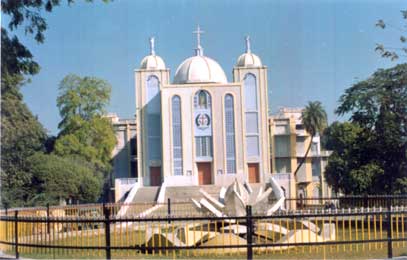
I also visited the Saint Jude Shrine Church in Jhansi which was crowded with many people on a pilgrimage and backpackers. This shrine is known to be very miraculous, as people can get the 'impossible'. I lit some candles and asked for some mannat's (prayer wishes). The church was very beautiful with arches, pillars and a dome. It was started by Maltese missionaries in Jhansi before Independence.
I had originally planned to visit all the backpacking tourist attractions like the Museum, Rani Mahal and Ganesh Mandir, but there was no time. Here is a pic of a Rani Jhansi statue on one of the roundabouts (gol chakkars) in Jhansi. Other roundabouts had a miniature version of the 'Gyarah Murti' statue located on Sardar Patel Marg in Delhi or Swami Vivekananda.
I travelled by the Bhopal Shatabdi Express which stops at travel destinations like Agra, Gwalior and Jhansi first. Unlike the usual trains it had a toilet where the 'naturals' don't fall onto the track but into a tank. I remember the last time I travelled by train, my watch fell down the toilet and onto the tracks somewhere near Ballarpur. The only thing that upset me on the trip was the behaviour of this guy with a pock marked face who complained that the on-train food was served late and created a huge ruckus shouting at the catering manger for almost an hour.
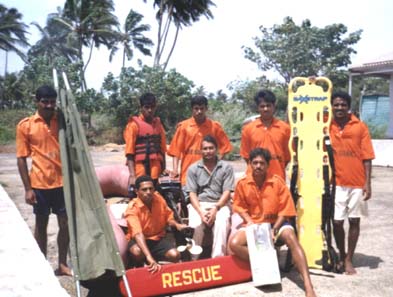
I heard about the strike by lifeguards in Goa which began on August 10th from news reports. Around 70 lifeguards working on contract basis have asked for approval of services, hike in salaries and provision of better life saving equipment. Currently, their equipment consists of only a rescue tube, a ring buoy and some rope. They have no insurance cover and off their salary of Rs 4,000, they recieve only Rs 2,000 with no pay slips or record kept. Since, the strike began more than 12 tourists have drowned on the beaches.
I once went on a holiday to Goa in June - July, it was the only period I managed to get my boss to sanction by leave application. Walking through the water on the Candolim - Calangute stretch, I was warned by 2 lifeguards and countless fishermen and other locals to stay clear away from the water. Basically, the monsoon season is at its peak during the months of June, July and August and the sea is really rough with dangerous currents that just pull you down. There were signs all along the beach directing people not to swim in the sea.
However, I was shocked to see that only a few sane folk took the warnings seriously. International tourists were smart and were seen nowhere near the water's edge. Indian tourists, especially North Indians, on seeing the sea for the first time, ran at full speed and jumped into the water. Most seemed to be consumed by the Goa Hype - you know the 'Goa jaakar mazaa karenge' types who recently bought fancy new swimwear and pool toys to show off and click photos with. There were some South Indian religious freaks too who walked deep into the large waves with hands joined in prayer throwing puja stuff into the water. Most folks either knew nothing about swimming or were fresh off a month long pool swimming course that never trains you to deal with an angry sea.
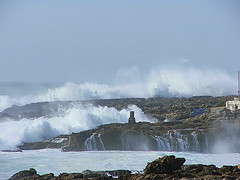
I can clearly vouch that the sea looked downright scary - a dark grey colour with stormy clouds up in the sky. The waves were metres high and violent on the nearby rocks and I just could'nt believe the utter stupidity of the fun- seekers. On being warned by local fishermen they just turned their heads haughtily, laughed and continued with what they were doing, so I am not really surprised to hear that so many drowned.
Here are 10 tips for great travel photos to keep in mind when going on that vacation to make sure you come back with great travel photos of your holiday.
Travel photo tip 1. Travel light - A point and shoot automatic camera or camcorder will be enough. Take enough film or tapes according to the amount of days you will be away. Don't forget batteries and the charger. No need to bring bulky stuff like a tripod, lenses etc. It's a real bother keeping an eye on it all the time. Unless you are a professional photographer on a paid shoot these things just end up just sitting in your hotel room.
Travel photo tip 2. If you are travelling by plane keep the film and camera in your hand luggage. Checked baggage is put through an X-Ray machine. The strong magnetic field of the machines usually spoil the film or wipe out the memory card of a digital camera. Checked baggage also has a high chance of getting delayed or lost in transit.
Travel photo tip 3. Research the Destination - search the Internet and read guide books on the places you'd like to visit. Especially look out for Interesting monuments, festivals or parades that may be on during your visit. Plan ahead, else you'll end up with pictures of just the airport and your hotel room.
Travel photo tip 4. Make a Photo Story - take photos of family/friends and you in different moods at different places. Like - annoyed at the airport - curious in the taxi - relieved as you check in the hotel - joyous on the ski slopes - or drunk at dinner.
Travel photo tip 5. Take pictures that prove you are in a different place from home. Most folks spend thousands of dollars on a dream destination but end up with boring pics of them lying in bed in a hotel room or sitting in the grass, snow or sand that could just as easily be their own backyard. Here are some ideas of what you could include in the background behind the subject that would give a feel of being in a new place. (a) Road Signs - which show your location, especially those in a different language or script like urdu or chinese. The weirder they sound the better.
(b) Food - pictures of you eating exotic dishes in restaurants with local decor.
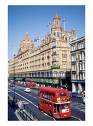
(c) Street Scenes with local folks using different modes of transport. eg. a doubledecker bus in London, an autorickshaw in India or a thuk thuk in Thailand. (d) You can pose with cops in different uniforms, police cars or cars with different license plate numbers.
(e) Local people of other races in traditional costumes. Most people may be suspicious or shy and not want to pose even if you pay them or ask nicely. In this case, click a shot of your family with the local people moving about in the background.
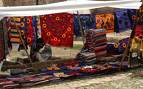
(f) Local markets - colourful stalls and beautiful artifacts being sold always make for great photographs. Look out for shops selling something unique like spices, dry fish or religious items.
(g) A local animal, bird, flower or tree native to the place visited like the Lotus flower in India, Gazelles in Africa or Coconut trees in the Carribean. Its obvious from the picture on the right that this girl is in Australia because of the kangaroo she is feeding.
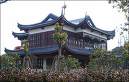
(h) Local Architecture - if there are no famous monuments in the area you can take a photo of you with any other house or building in the area that looks old and traditional like this photo of a chinese house.
Travel photo tip 6. If you see something you really like and can't buy because its either too expensive, bulky or not for sale, Just take a photo of yourself with it like the lady on the right.
Travel photo tip 7. If you need to give your camera to someone else to click a photo of yourself make sure that you can run faster. Remember, a camera is a very resellable item and thiefs loiter about looking for such chances. Give your camera either to a fellow tourist or a person wearing high heels, visibly lame, fat, unfit or elderly. Don't trust touts who keep following you and asking if they can help. Many people insure their camera for this very reason.
Travel photo tip 8. While taking a photo of a famous monument like the Effiel Tower or Taj Mahal make sure the full building fits into the frame behind the subject. If you are too close, you'll get a background with just indistinguishable bricks or pillars like the lady in the second photo.
Travel photo tip 9. Keep the film/tapes you've finished with either in different bags or in your hotel. Just in case you lose your main camera case and film you will still have some of the photo memories in a safe place.
Travel photo tip 10. Be extremely careful when photographing religious places, veiled women and government buildings - especially areas like docks, railway or military areas. There may be no readable signboard that photography is prohibited but officials or annoyed family members may confiscate or break your camera. However, if you are a woman you may get away with it but try not to take risks.